
MARY’S CULINARY PASSPORT · POSTCARDS
China
AT A GLANCE
FOOD FIRST
Food Culture
Chinese cuisine encompasses many regional traditions, each with its own techniques, staple grains, aromatics and balance of flavor.
Signature Foods
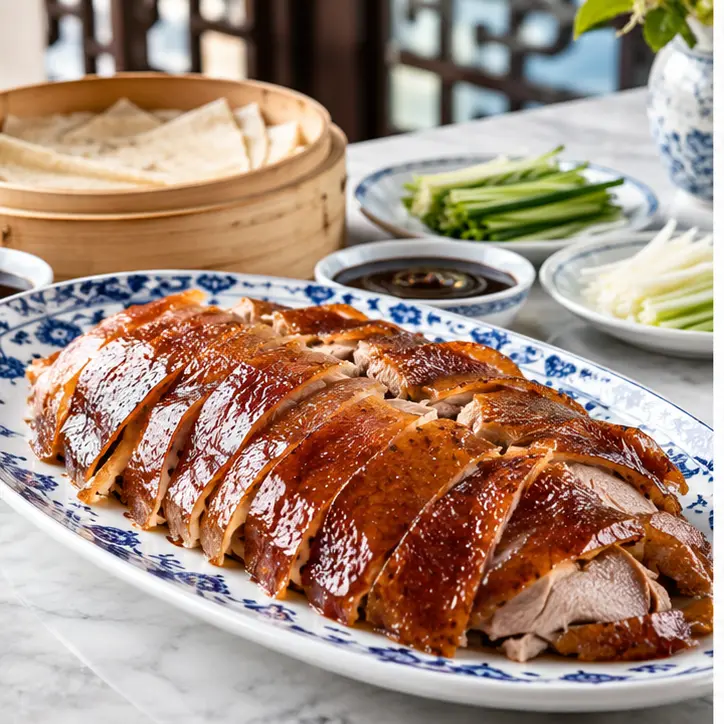
Peking duck
lacquered roast duck with pancakes
Xiaolongbao
delicate soup dumplings
Mapo tofu
tofu with chile and Sichuan pepper
Dim sum
varied Cantonese small dishes
Ingredients & Flavors
Regional Specialties
Sichuan
chile heat and numbing pepper
Cantonese south
seafood and delicate steaming
Jiangnan
refined dishes and subtle sweetness
Dining Customs
Dining customs vary by family, region and setting, but these practical notes offer a thoughtful starting point.
Shared dishes
Several dishes are placed centrally; take modest portions and leave enough for others.
Respect and seating
Elders and honored guests are commonly seated and served first at formal meals.
Chopstick etiquette
Never stand chopsticks upright in rice, point with them or tap bowls; use communal utensils when supplied.
Markets & Culinary Experiences
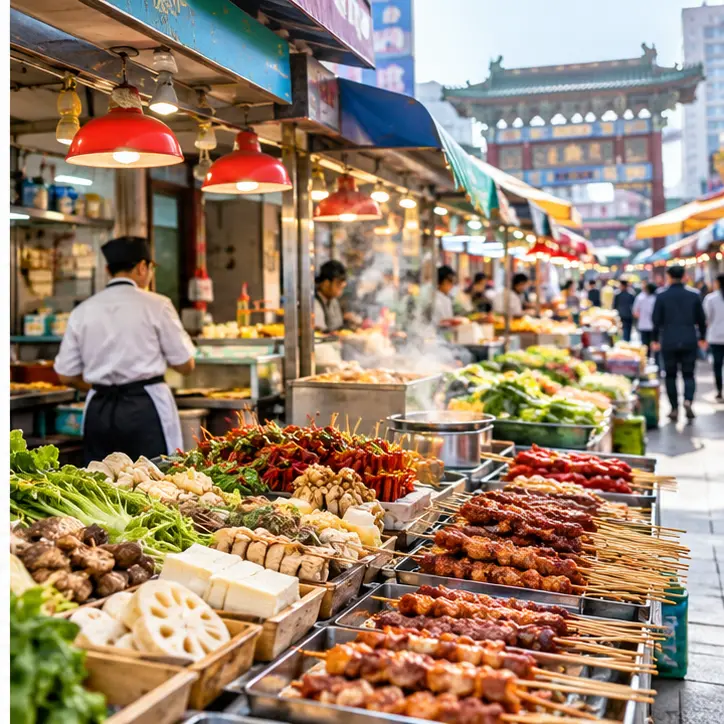
Visit local produce markets, bakeries and neighborhood food halls to see how rice, wheat noodles, soy shape everyday cooking. A guided market walk or small cooking class is a welcoming way to meet local cooks and learn the stories behind the table.
Sanyuanli Market
Beijing
Huangsha Aquatic Products Market
Guangzhou
Muslim Quarter food markets
Xi’an
Market days, hours and locations can change. Confirm current details before visiting.
TRAVEL SECOND
Cities & Attractions
Beijing
Shanghai
Chengdu
Things to Do
Forbidden City, Beijing
Explore imperial courtyards and palace collections.
Great Wall at Mutianyu
Walk a restored section outside Beijing with mountain views.
Terracotta Army, Xi'an
See thousands of life-size figures from the Qin dynasty.
Chengdu panda bases
Visit early in the day and pair the experience with Sichuan teahouse culture.
Festivals & Traditions
Spring Festival · January or February
Family reunions, ancestor honoring, red decorations and symbolic foods welcome the lunar new year.
Dragon Boat Festival · May or June
Boat races and zongzi commemorate a tradition associated with Qu Yuan.
Mid-Autumn Festival · September or October
Families share mooncakes and admire the full moon.
Festival dates and programs can shift from year to year, especially those tied to lunar or religious calendars. Confirm the current schedule before traveling.
Traditions to Notice
Tea hospitality
Tea is offered to welcome guests; a light finger tap can quietly signal thanks in parts of southern China.
Red-envelope giving
Red packets containing money mark the new year, weddings and other milestones.
Before You Go
Capital: Beijing Primary language: Mandarin Chinese Currency: Renminbi
Opening times, entry rules and local conditions can change. Confirm practical details with official destination sources before traveling.