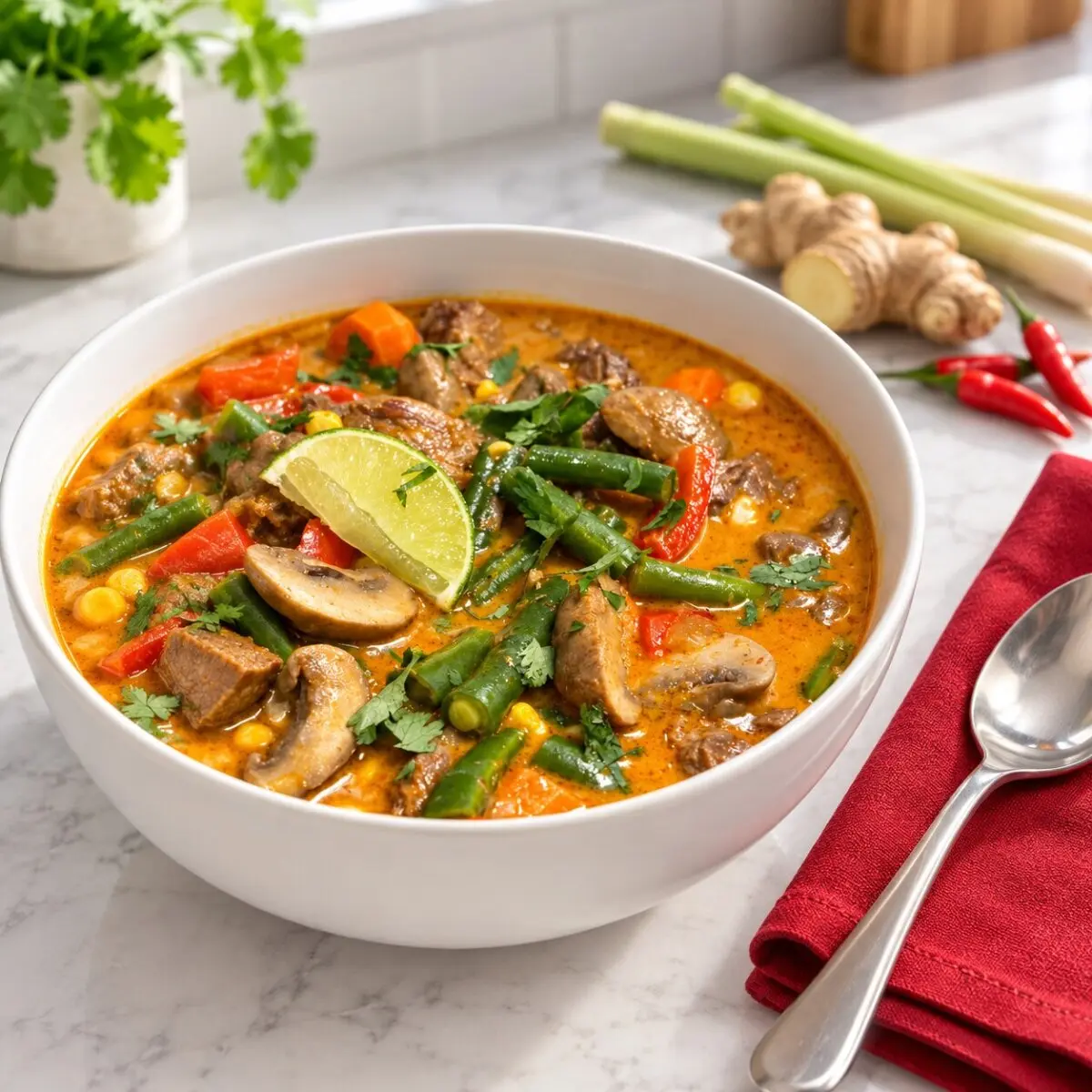
This is a settle-in-and-let-it-simmer kind of soup. The beef gets the long, gentle cooking it needs, while the vegetables join near the end so they still have something to say. Bring a generous bowl and a little patience; the pot handles most of the work.
Indonesian
Beef Rendang Vegetable Soup
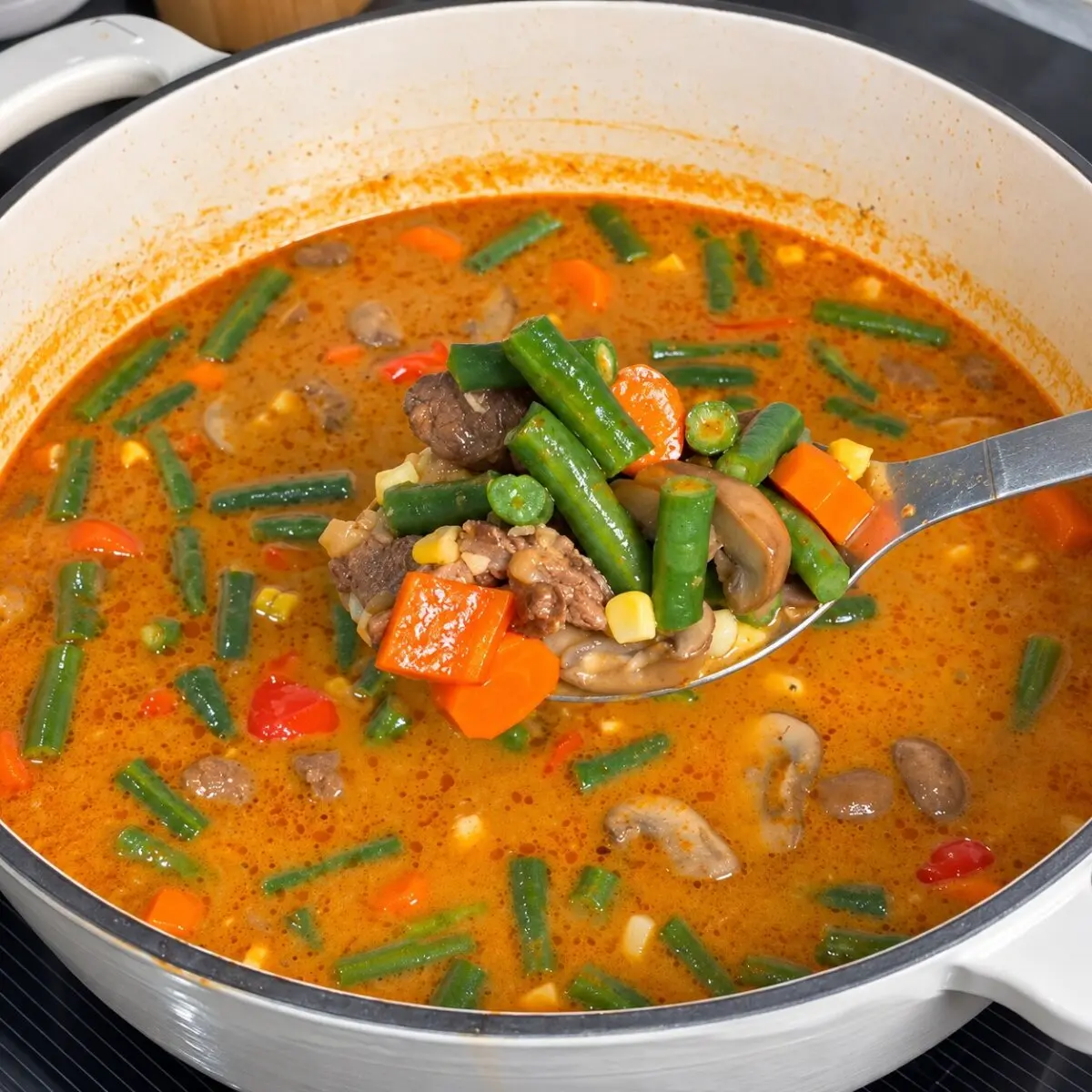
I really hate to toot my own horn, but this is one soup I’m especially proud of. It’s the kind of meal that makes me want to pull up a chair, tear off a piece of bread and stay awhile. I’ve taken inspiration from the coconut-rich flavors of rendang and brought them into a hearty beef-and-vegetable soup that feels right at home on an American table. The beef becomes wonderfully tender, and the warm spices, lemongrass and coconut give the broth enough depth to make that last spoonful worth chasing.
Mary’s Introduction
Why These Flavors Work
Browning builds savory depth in both the beef and mushrooms. Coriander, cardamom, cloves, cinnamon and star anise give that richness a warm aromatic backdrop, while lemongrass and lime zest add citrus fragrance. Coconut milk softens the edges of the red curry paste; the small amount of brown sugar rounds the broth without making it a sweet soup. Carrots, corn, beans and bell pepper bring contrasting textures and natural sweetness.
THE RECIPE
Beef Rendang Vegetable Soup
Prep 25 minCook 180 minTotal 205 min
Equipment Needed
- Dutch Oven Shop this item
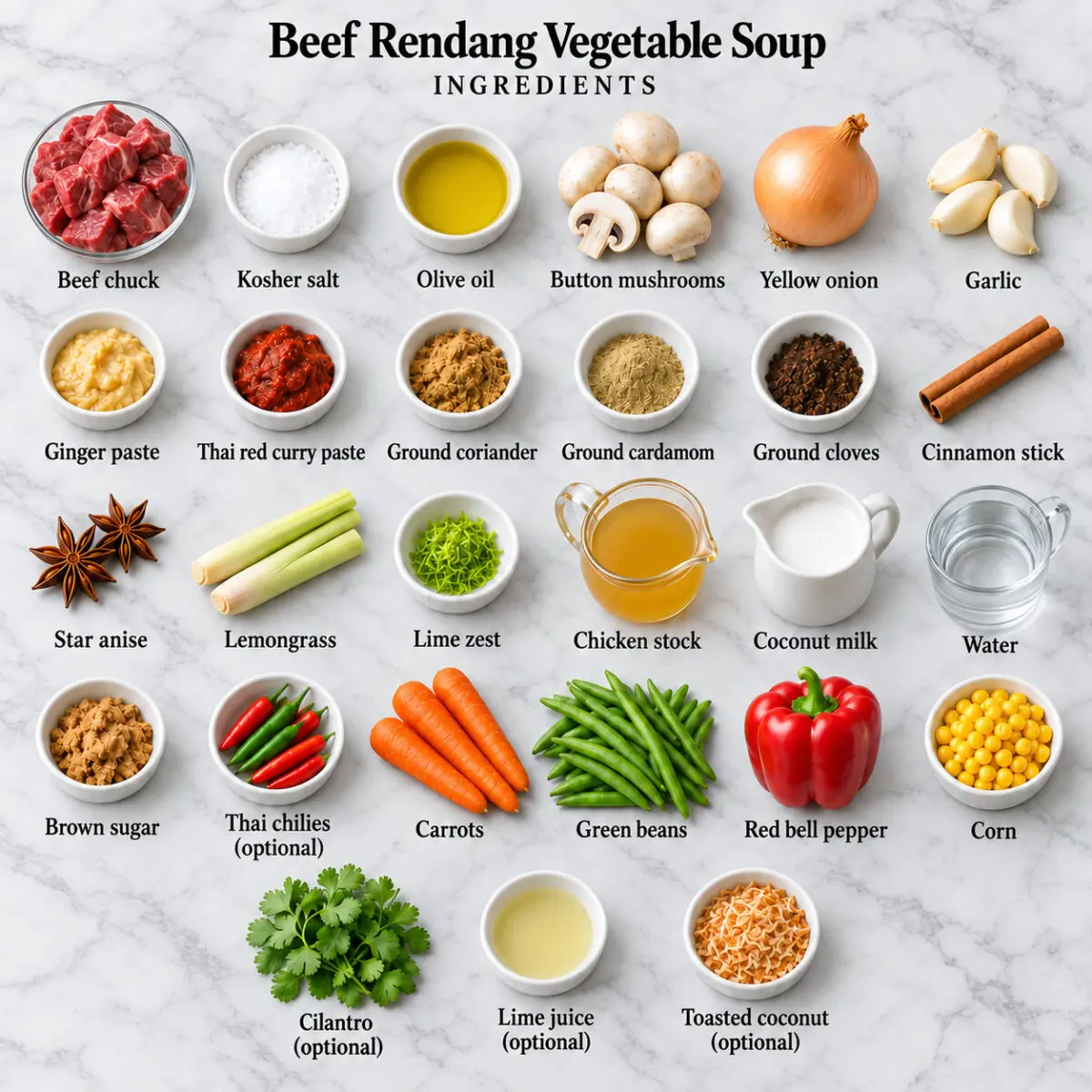
Ingredients
Soup
Optional garnish
Instructions
Chef Notes
- Use a 5–6-quart Dutch oven or heavy soup pot. The 32 ounces of stock means one 32-fluid-ounce carton, approximately 4 cups. The final 10–12-cup yield is approximate and depends on evaporation and any extra water added.
- Cooking time is an estimate, not a deadline: allow about 3 hours of cooking plus 25 minutes of preparation. The 2–2½-hour beef simmer comes after browning and building the base, and the vegetables need another 15 minutes or longer; especially firm beef can extend the total beyond 3 hours.
- The cinnamon stick, whole star anise and bruised lemongrass flavor the broth and are removed before serving. The optional chili is chopped, so it remains in the soup.
- Curry paste note: for a particularly hot, concentrated paste, start with 2–3 tablespoons; a mild paste may need 5–6 tablespoons. The listed baseline is ¼ cup. Taste the broth before adding optional Thai chili. Mae Ploy red curry paste contains shrimp; check the actual curry-paste and stock labels for allergens.
- How do you know the protein is done? For the boneless beef chuck pieces, insert an instant-read thermometer sideways into the center of several of the largest pieces, keeping the tip out of the surrounding broth. The safe minimum for whole-cut beef is 145°F followed by a 3-minute rest; this long-simmered soup needs considerably more cooking for tenderness, typically around 190–205°F in the meat. The pieces should be opaque inside and separate readily with a fork, with little resistance. Temperature is the primary safety check, not color or feel alone; fork tenderness is the separate texture check. Do not stop cooking chuck merely because it has reached the minimum safe temperature.
Nutrition estimated per serving
680 Calories56.6 g Protein30.8 g Carbs36.4 g Fat19.4 g Sat. Fat7.5 g Fiber14.8 g Sugar1522 mg Sodium
View Full Nutrition Label
Nutrition Per Serving
Calories680
Protein56.6 g
Carbs30.8 g
Fat36.4 g
Sat. Fat19.4 g
Fiber7.5 g
Sugar14.8 g
Sodium1522 mg
Nutrition information is an estimate based on available ingredient data and can vary by brand, preparation and substitutions. It is provided for convenience and is not medical advice.
Ratings & Reviews
Be the first to rate this recipe.
LEFTOVER IDEAS
Turn the leftovers into something new.
YOU MAY ALSO LIKE
More from Mary’s Kitchen
How to Make Beef Rendang Vegetable Soup
Brown the beef
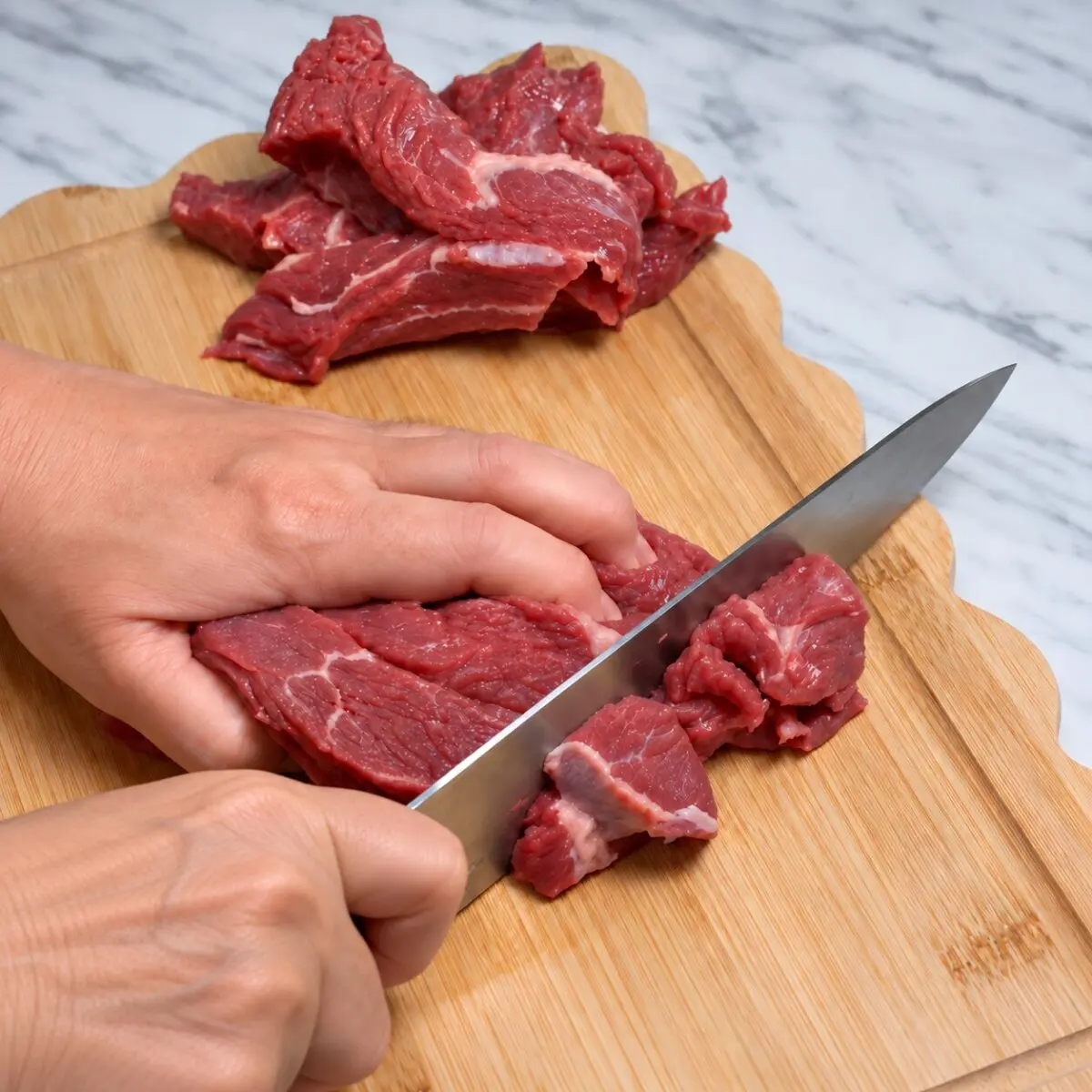
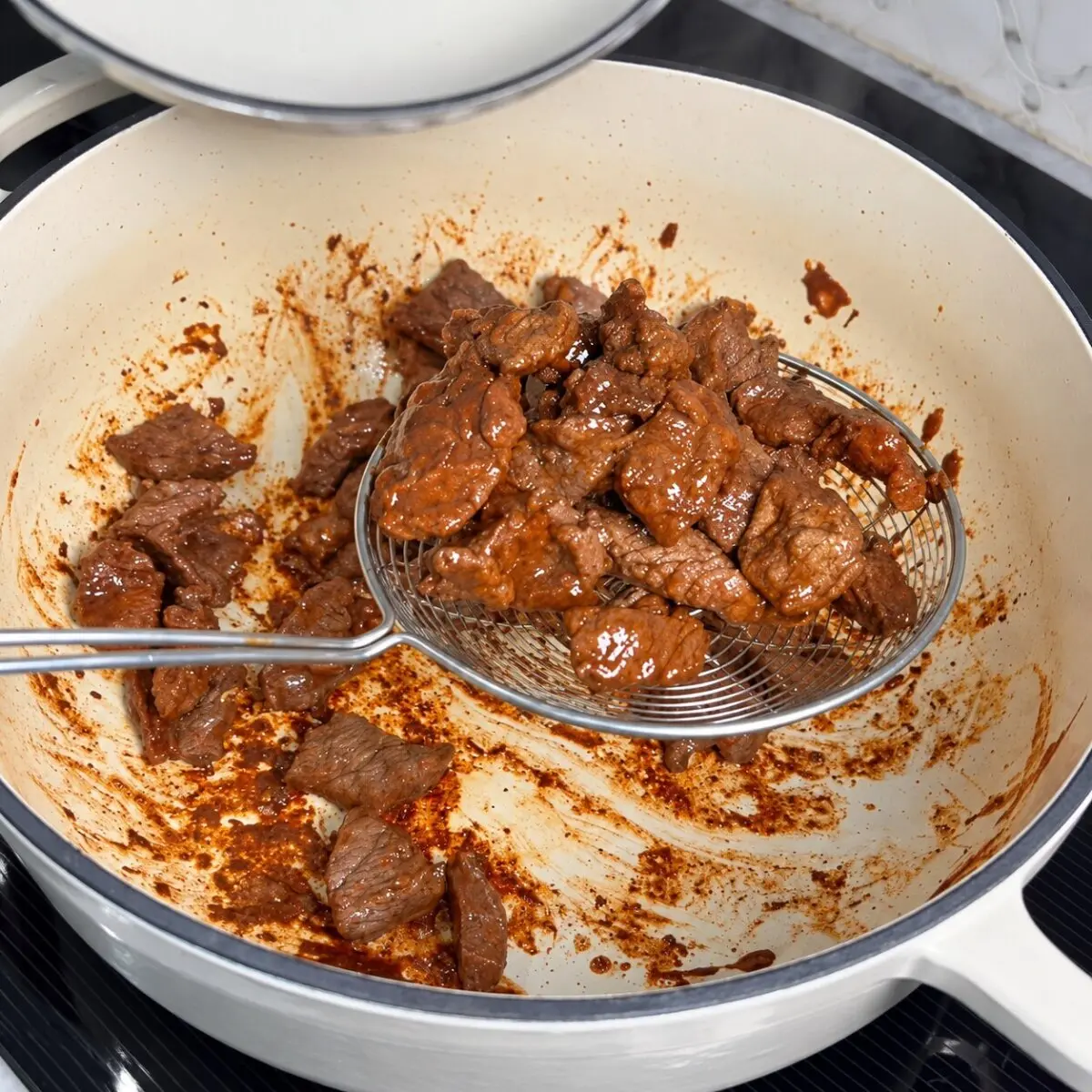
Dry and salt the chuck, then brown it in batches with 2 tablespoons oil. Transfer to a plate.
Brown and hold the mushrooms
Cook the mushrooms in the remaining oil for 6–8 minutes, then refrigerate them in a shallow container during the long simmer.
Cook the aromatics
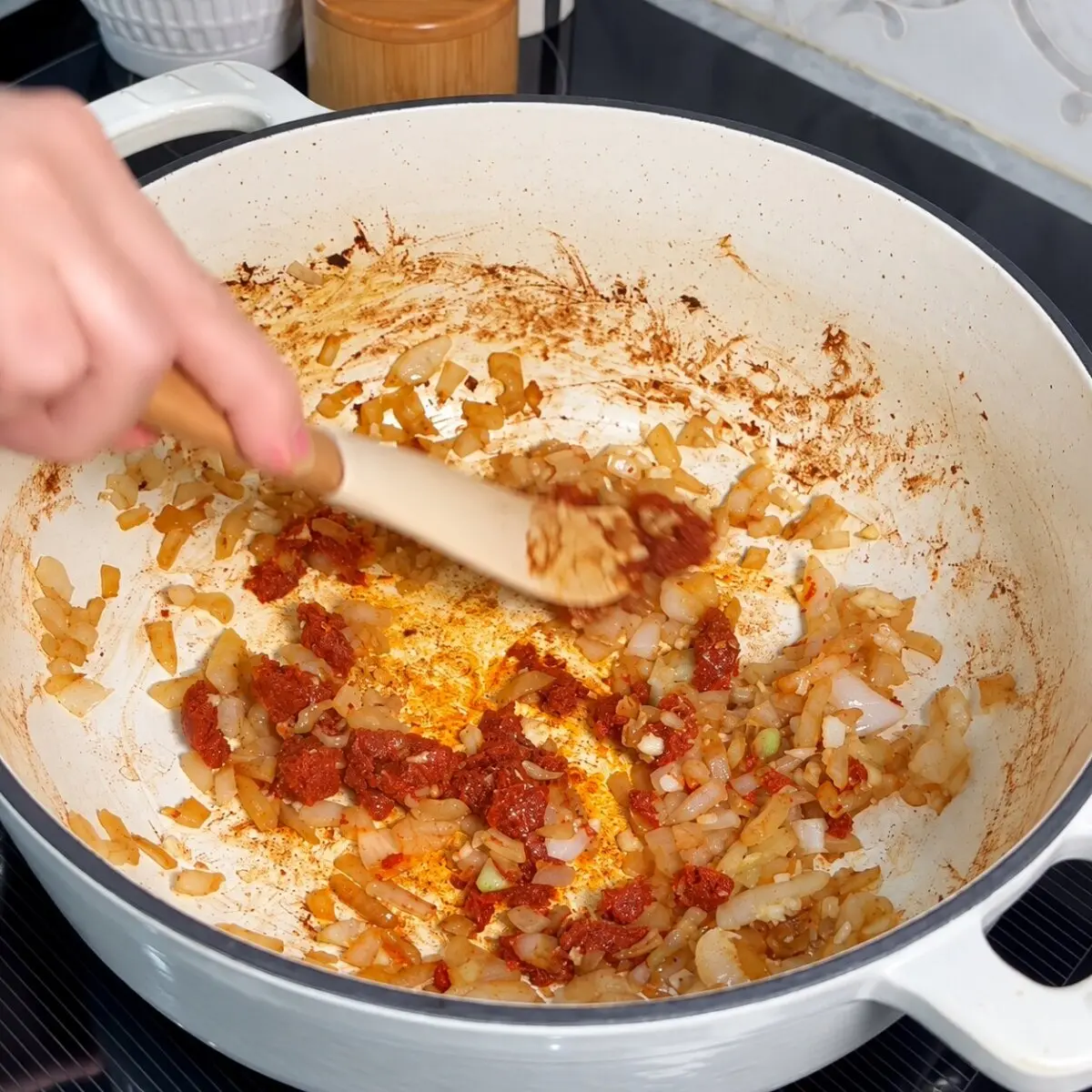
Soften the onion, then cook the garlic, ginger, curry paste and ground spices in the sequence given.
Build the broth
Deglaze with stock, add coconut milk, water, sugar, whole aromatics and zest, and return the beef.
Simmer until nearly tender
Cover and simmer gently for 2–2½ hours or longer as needed; keep enough liquid around the beef.
Add vegetables
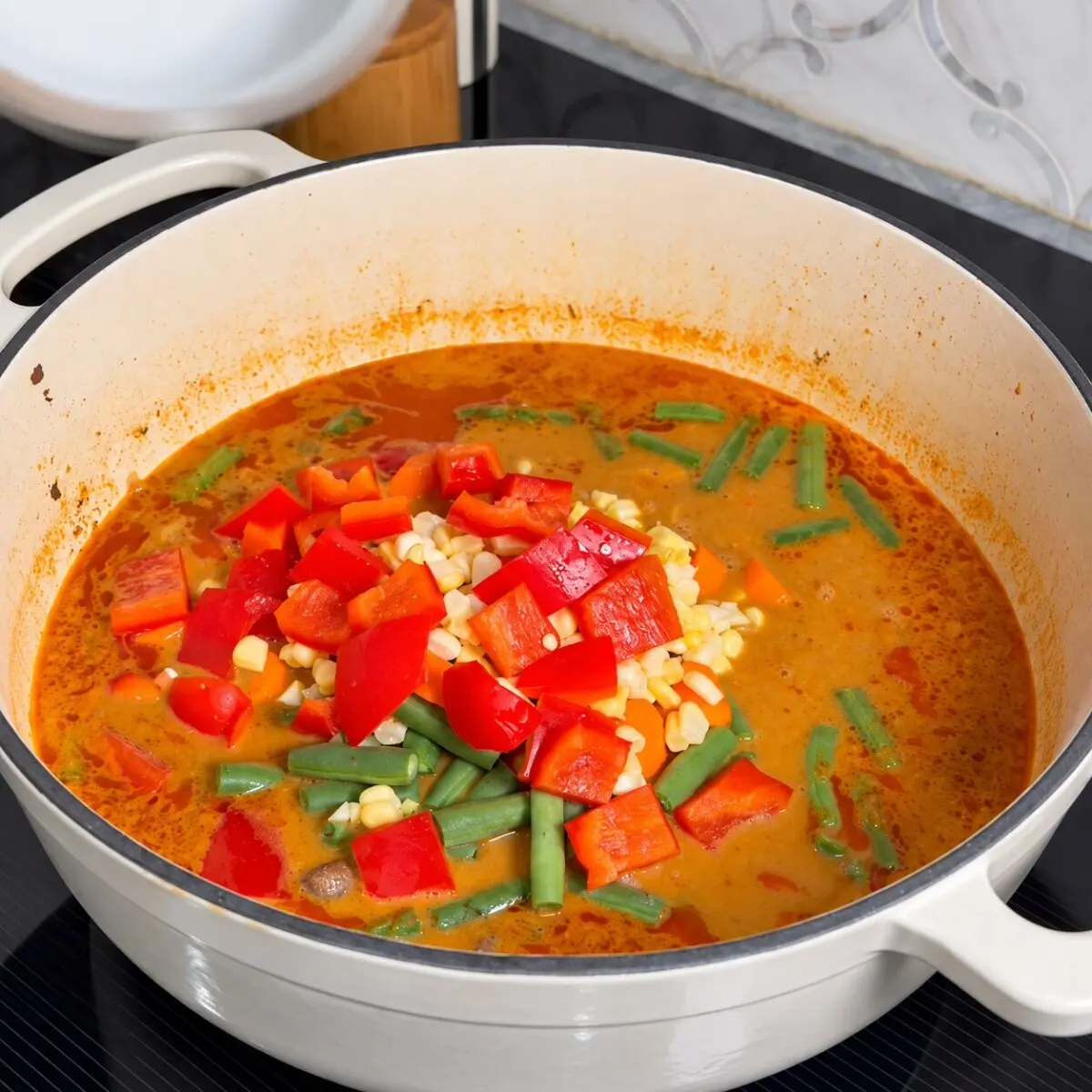
Return the mushrooms with the carrots, beans, pepper and corn. Add chopped chili only after tasting. Simmer partially covered until tender.
Finish and serve
Remove the whole aromatics, adjust salt, optional lime juice and water, then divide among four bowls and add optional cilantro and toasted coconut.
Recipe Guidance
Storage
Divide the soup into small, shallow containers and refrigerate promptly, within 2 hours of cooking (1 hour if the room or outdoor temperature is above 90°F). Do not leave a large pot on the counter to cool completely. Keep at 40°F or below and use within 3–4 days. Freeze portions with room for expansion for about 2–3 months for best quality; the vegetables will soften and the coconut broth may separate. Thaw in the refrigerator.
Reheating
Reheat only the portion needed in a saucepan, stirring and adding a small splash of water if necessary. Bring the soup to a boil and check that the center of the beef pieces reaches 165°F. Reduce the heat once reheated; prolonged boiling can separate the coconut broth and soften the vegetables. Stir separated broth back together before serving.
Make Ahead
Prepare and refrigerate the cut vegetables and measured aromatics the day before, keeping raw beef separate. You can also cook the whole soup ahead, cool it promptly in shallow containers and refrigerate it within the 3–4-day storage window. Add the optional cilantro after reheating. Do not brown the beef one day and postpone finishing its cooking until another day.
Serving Suggestions
Divide the beef and vegetables among four large bowls, then ladle the broth over them. Finish with the optional cilantro and toasted coconut. Plain rice or crusty bread can be offered separately if desired; accompaniments are not included in the soup’s yield or nutrition and no linked ORTC pairing has been selected.